NJEntwistle
Husband. Father. Web designer. Here's where I combine two of my hobbies - writing and nature.
Influence
Ramble
I’m not so jaded after all…
The last few weeks have been revolutionary for my way of thinking. And it’s all thanks to a Cambridge scholar…
Influence
This is going to read like a little bit of a biography piece, and I suppose it is to an extent, but to understand the present you need to know a little of the past.
I was raised in Bolton, mostly by my grandad. He adored nature. He had good access to it too, living in the Bradshaw Brook valley, close to what would become the Lancashire Wildlife Trust’s Seven Acres nature reserve and Leverhulme Park, which cradles the River Tonge.
Every weekend we’d be up before the sun, taking in the suburban pre-dawn as we stalked through the streets and down on to the twisting banks of the Bradshaw Brook, heading northwards to Jumbles reservoir or even further on to Entwistle. Or else we’d head south-west, through a cemetery, as teeming with wildlife as it was absent of human life, meeting up with the River Tonge and following it through Leverhulme as it joined the Croal and turned through Moses Gate on its journey to the Irwell, the Manchester Ship Canal, the mighty Mersey and into the great Irish Sea.
All the while I’d be talking his ear off and quizzing him about the nature surrounding us. What tree is this? Look at how strong the river looks! Was that a Peregrine?
I was immersed and fully took on my grandad’s beliefs and thoughts that everything in nature had its place and it was all to be respected and treated with honour.
That has never gone away. But as I grew through education and then work, the time I was able to spend in nature reduced, almost as much as nature itself reduced around us, with various governments looking to continue their urban sprawls and eat away at natural habitats. I turned angry and joined various organisations that protested against such initiatives, feeling that nature itself was under attack and that I would join those in defence of it.
But as with so many, I saw us fail time and time again. More and more of our number were arrested and the rivers, meadows, forests and animal habitats that we defended were destroyed. I became jaded and fell away from the cause, thinking it pointless as we lived through government after government scything away at green area protection laws in favour of more housing, rather than working on brownfield initiatives.
I’m married now, with a young son, who I’m keen to teach about nature in the same way that I was taught. It’s painful to me that he won’t have the same opportunities to see wildlife that I did. Let’s take hedgehog numbers as a prime example – down 75% since the turn of the century when I was 9 years old. That’s 75% less chance to see one of our spiked, slug-hunting, native creatures as I was.
And yet what can I do about it as a singular human?
On Friday 9th May, I headed out to Manchester to watch one of my favourite authors speak as part of his latest book tour. I’d finished “Is a River Alive?” earlier that evening sat under the shade of a beautiful sycamore tree in a city centre park and to see Robert Macfarlane talk about this excellent piece of writing was exciting!
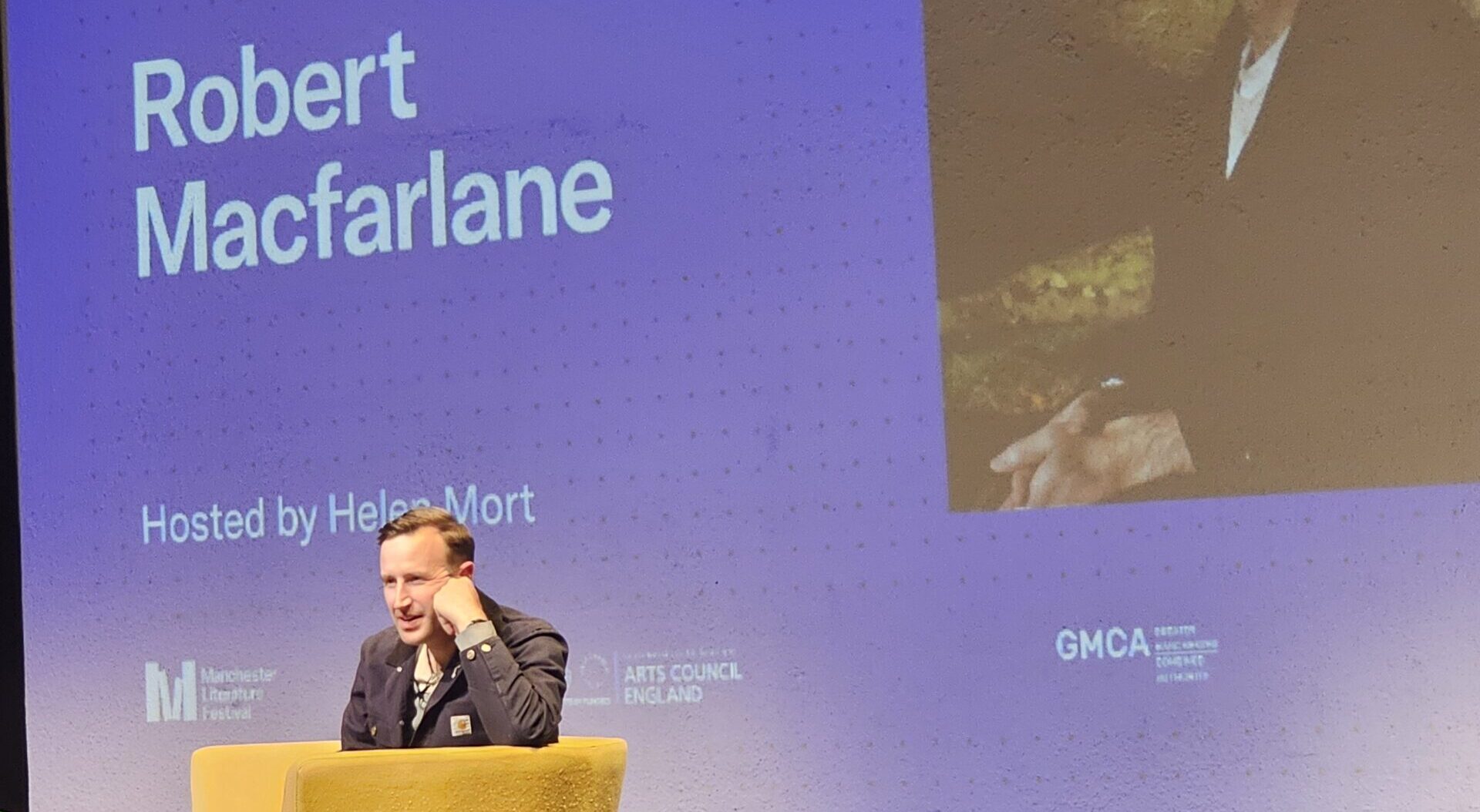
I sat and listened as Macfarlane talked about the characters he’d met that helped craft his book. He laughed as he remembered a previous book review saying “Robert Macfarlane has never met a dickhead,” indicating the passion at which he speaks about these titans of human society in his pieces. And like Macfarlane said that night, of course he’s met dickheads, he just chooses not to give them the airtime and that they aren’t worth highlighting in a book more than the likes of the star of the second section of “Is a River Alive?”, Yuvan Aves, who has lived through such devastating personal tragedies to become a schoolteacher by day and a turtle hatchling shepherd by night.
And it’s this idea more than anything that has been rattling through my head these last few weeks and what has made me want to put pen to paper (or hand to keyboard) more than anything in years.
We often focus on the tragedy. Take one episode of the nightly news currently and you’ll see war between the Ukraine and Russia, financial tugs of war between World leaders and of course, more war, with the genocide being imparted by Israel on Palestine. It’s this kind of tragedy that resulted in me sheltering myself away from world affairs for a number of years, as I tiptoed a line of poor mental health.
But, whilst it’s right that we open ourselves up and make ourselves aware of this tragedy and educate ourselves of suffering, it’s also important that we don’t let it completely engulf us, as is so easy to do. Take some time to appreciate that there’s good in the world too. For example, the hundreds of charity organisations pushing to aid Palestine, those fighting for political reforms to help the least fortunate and most needy and those putting themselves in harm’s way to protect the most vulnerable.
Just because it isn’t aired, it doesn’t mean good things aren’t happening in the world and that honourable people aren’t out there fighting the fight.
And that’s why people like Robert Macfarlane are important. Whilst being one of these good people that is fighting the fight himself, Macfarlane is quick to pass the praise and passionately push others up to the pedestal. I would never have heard of Aves and the incredible work he is doing in Chennai if not for Macfarlane. I wouldn’t have heard of the defenders of the Mutehekau Shipu or the Ecuadorian cloud forest. I would never have heard of the river guardians pushing for legislation to protect our world’s waterways.
Reading the book was an experience. Hearing Macfarlane talk about it has transformed something in me. And it took a little while to figure out why, but it’s clicked. Whilst the author speaks with an eloquence and a natural flair that you’d expect of a scholar who studied at both Cambridge and Oxford, it’s still the same passion about nature that I heard from my gruffer, more working-class grandad almost 30 years ago whilst trudging the banks of the Bradshaw Brook.
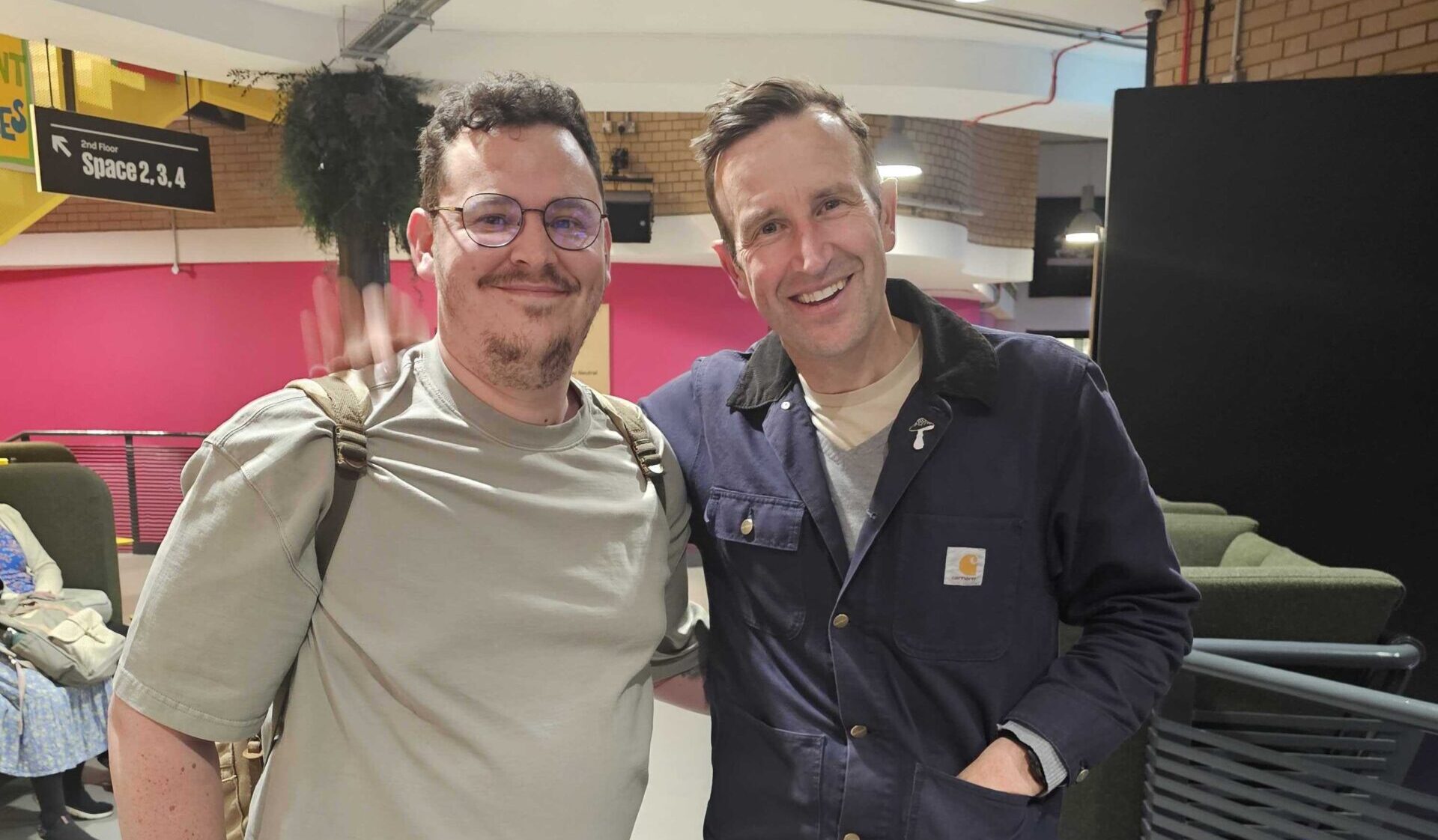
And it’s a combination of reading about these behemoths of natural world guardianship, hearing the passionate speech of Robert Macfarlane and the stark, thunderbolt-like reminder of who I am, where I come from and who raised me that has inspired me to look for projects to get involved with. In a more reserved way with less risk of arrest than previously of course.